

sticks in black water,
the lake where my grandparents lived looked
black until you crept to the side and saw sticks
with splintered stems.
i’ve heard love stories like that before.
the story where a couple chooses the
happiest moments for coffee mugs,
pillows, and twentieth anniversary
albums. The wife treats the decision
of the best font to use to describe
herself kissing her husband on the
cheek as wind blew away her beach
hat as equal to a single mother
deciding what to do for dinner
with six dollars left in her purse.
sticks get caught between the
lily pads as the dragonflies fly
over the black water, and the
wife writes: “A fairytale for the
ages” after she was on the
dance team in high school,
before she became a first
grade teacher, and he
graduated with a lacrosse
scholarship before he started
a career in home construction.
i’ve heard love stories like that.
Only fairytales were closer
cousins to zombie stories than
those with a happily ever after.
I’ve witnessed the love stories
that inspired the images of
lilies blooming on the pads,
and attracted hummingbirds
alongside the dragonflies.
I’ve felt the love story
where the piano plays
the kind of dark tune
that only comes after
loss ripped the lily pads
from the lake.
beside a boardwalk built
after business directors and
city planners tore the old
pavilion down;
a place where parents
warned their children
not to go after the band
started playing live,
teens pulled out
their cigarettes, and almost
all lied about their age.
Beside a boardwalk, after
the pavilion was torn down,
the children, my husband,
and I went to a place where
they made hamburgers as
thick as five patties you get
from the drive thru line.
Bartenders served margaritas
in plastic cups smaller than
the standard red solo cup
common at college parties.
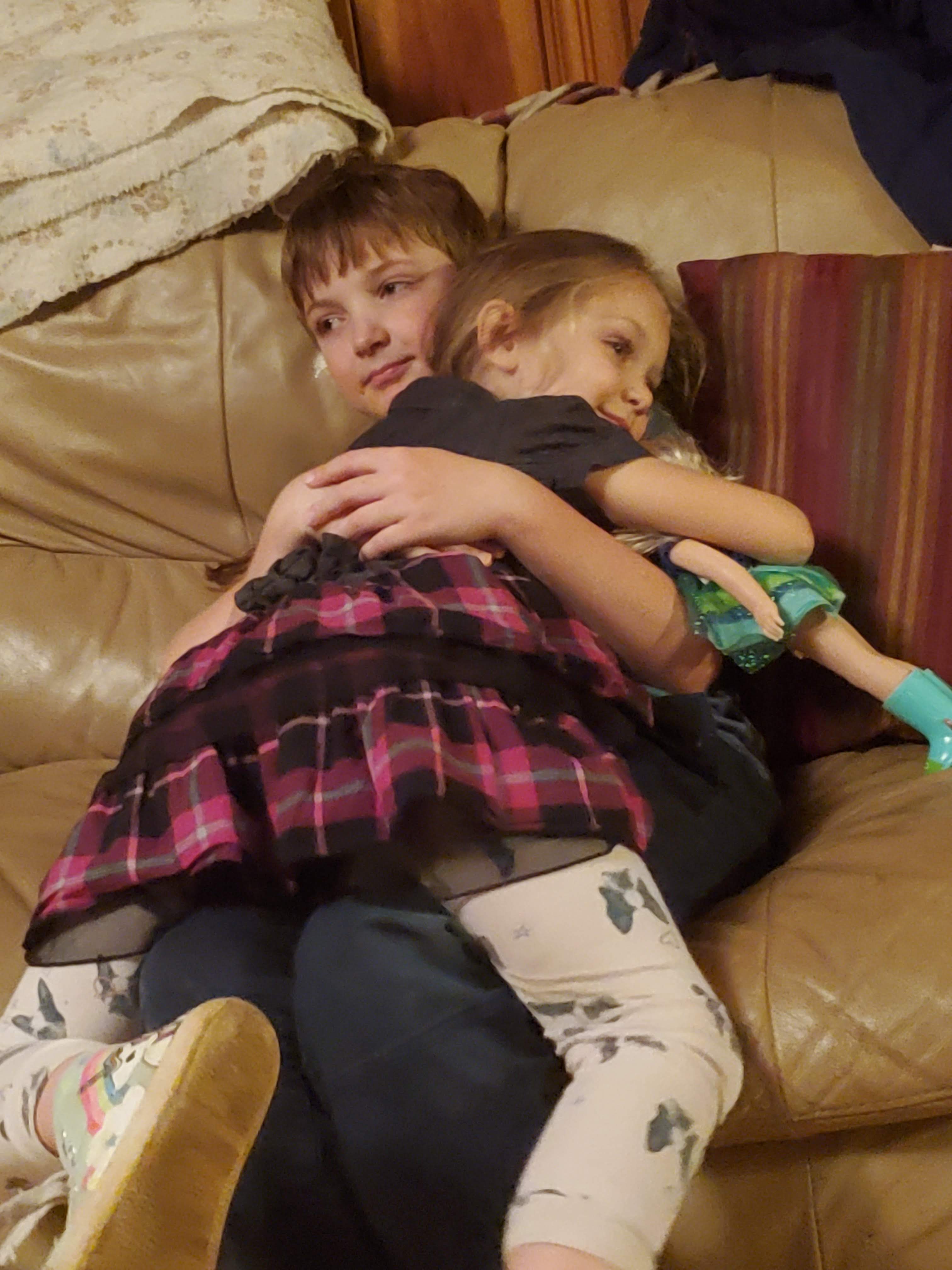
Corrie and Hayes sat on
the high top stools between
my husband and me.
“Mommy, that’s yuk,” Corrie
said of my margarita in the
plastic cup as if it was
a stick in black water.
Honey wisps of waves,
curls and frizz framed
her face after they had
fallen out of her pony
tail held up by a royal
purple bow. She wore
a turquoise jacket with
a pink, turquoise, silver
outline of a star with a
purple and blue skirt
that remind me of Main
Street stores with lace and
San Francisco in the 1960s.
“Why can’t we swim in
the ocean today?” asked my son,
Hayes. His blue eyes seemed like
a mirror maze in a carnival, and
its creators never designed a map.
But below their surface, the answers
he knew. He asked out of the need
as children who cling to teddy
bears or a favorite book at night
needed to know it’s there.
“Hayes, it’s still winter,” Corrie said
as she spoke with an employer’s
voice upon finding an error in an
employee’s work. “But we can swim
in the indoor pool later, right?”
Hayes asked as he looked from me
to his dad. In the words spoken
from the mouths of parents in
languages current and dead,
he said, “We’ll see.”
Half of a hotdog lay in Corrie’s
red basket. I said, “Finish your
hotdog.” She looked at me and
said in the ways we imagine
fairies speak, “I don’t want the
bread, Mommy.” I scraped the
hotdog out of the bun and cut
it up. Three bites later, she
rubbed her stomach, “I’m
so full.” My husband said,
“Corrie, you ate three bites.”
“But, my stomach really
hurts,” she said. “Well,
we’re still eating,” I said.
On a stage reminiscent of a
giant tree stump, a boy played
guitar. It took me back to a
time when coffee houses first
opened up, and guitarists and
poets kept three different
hacky sacks. Corrie looked
up at me with eyes made of
all the colors stars design,
“Can Hayes and I dance?”
“Yes,” I said. The children
got up, and Corrie grabbed
her big brother’s hands in
front of the stage. She started
to spin as if she was singing
the nursery song, “Ashes, ashes
we all fall down.” She ran in a
circle sideways, and spun Hayes
around. He said, “Whoa … “
and made a zoom and
a spitting sound.
“Your children are beautiful,”
one customer said from a bar stool.
sometimes storms swipe leaves
in autumn before we see the
full colors and makes sticks
of branches or running ink
on a paper left in the rain.
In the months after the
ambulance doors swung
open and rushed Corrie
into Levine, Hayes sits on
a cement bench in the cemetery
not far from her grave staring at the sunset,
and the orange and yellow flowers.
By Rebecca T. Dickinson. Copyright R.T. Dickinson 2020.

 Corrie's Season
That is beautiful and terribly sad at the same time.
Thank you, Stine, for reading! It is incredibly sad what we have experienced, and I wish I could give my son his sister back. I write for him instead. Thank you for reading!