
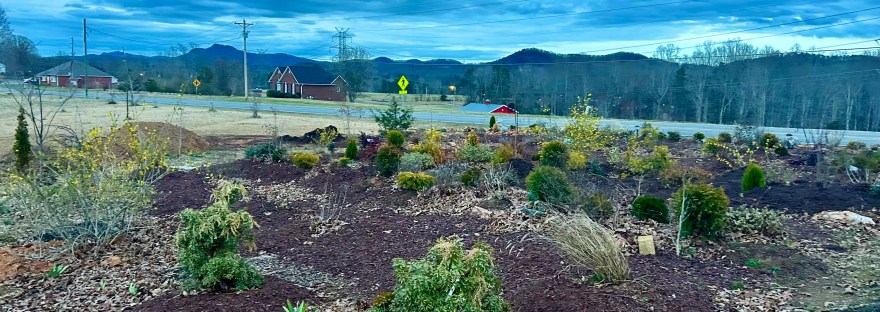
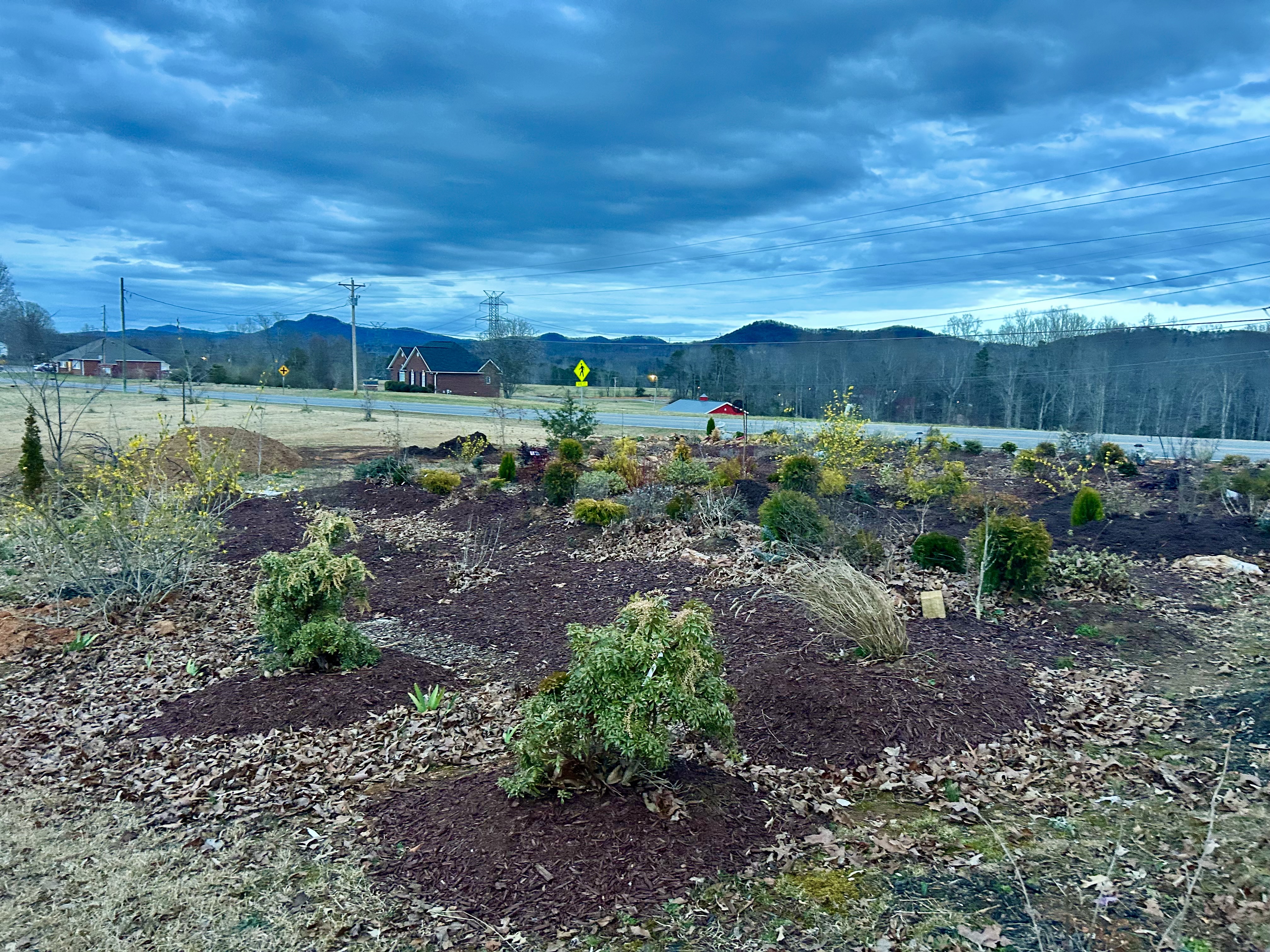
The gardens, a doctorate, career, family commitments, and a general disinterest in writing have kept from Corrie’s Season lately. Throughout the winter, I have focused on the Winter Garden of Arendelle, while adding evergreens, conifers, and winter interest plants in other gardens, too. When I look at the gardens, I want to see color year round.
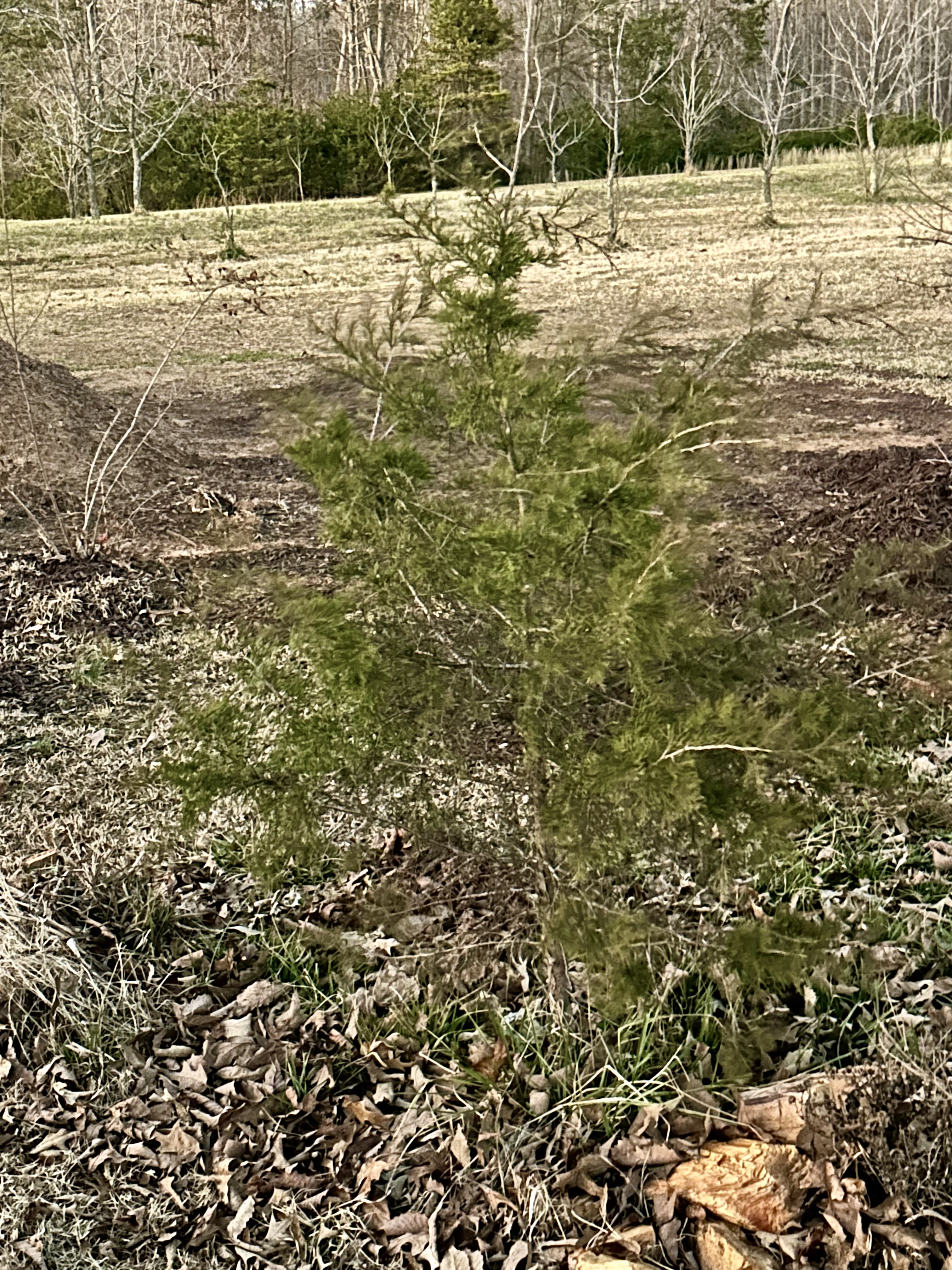
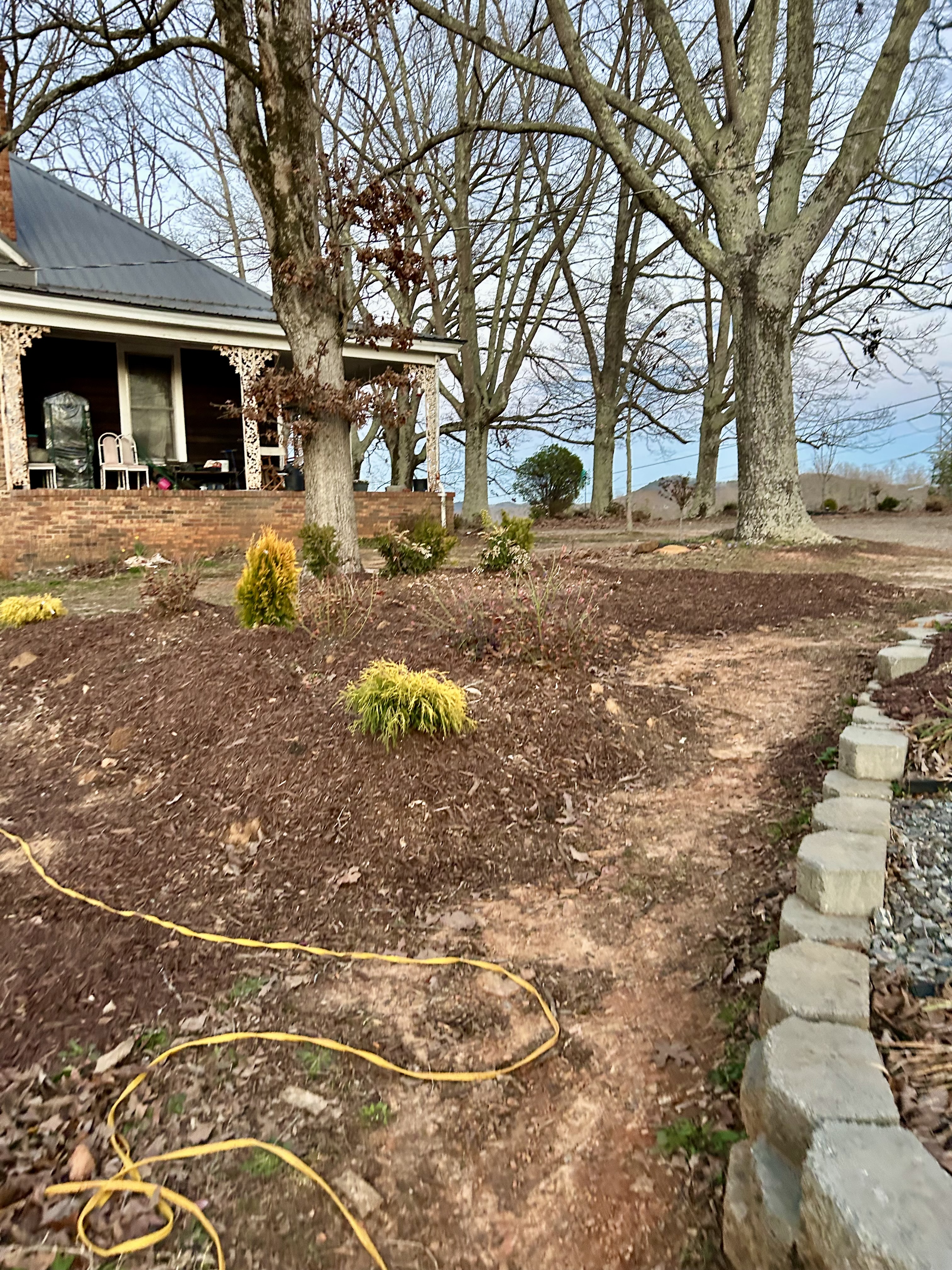
The tree in the picture above is one from the farm that I had moved two years ago. It sits on the current border of Arendelle, but my husband and I have discussed Arendelle continuing beyond it’s current border. It might swallow smaller gardens, like the Lily Garden. I will not know until I finish no dig gardening the current areas.
No Dig Gardening
I started no dig gardening one year ago as a way to ensure healthy soil and deal with red clay. Our land has been described as difficult and barren for plants. John’s mother tried different plants through the years, and she was the most successful with day lilies.
I started reading about no dig, or no till, gardening online. There are different versions, so you’ll need to research about it. All but three of the eleven gardens are no dig.
- Use cardboard without tape, staples, and plastic.
- Use 3 to 4 layers of cardboard over the area.
- Use cardboard because it suppresses weeds. If you see weeds, then they are easy to pull out.
- Add leaf mulch, fall to winter, or dirt.
- Add layers of dirt and compost. Worm castings are also great.
- Top soil and then mulch
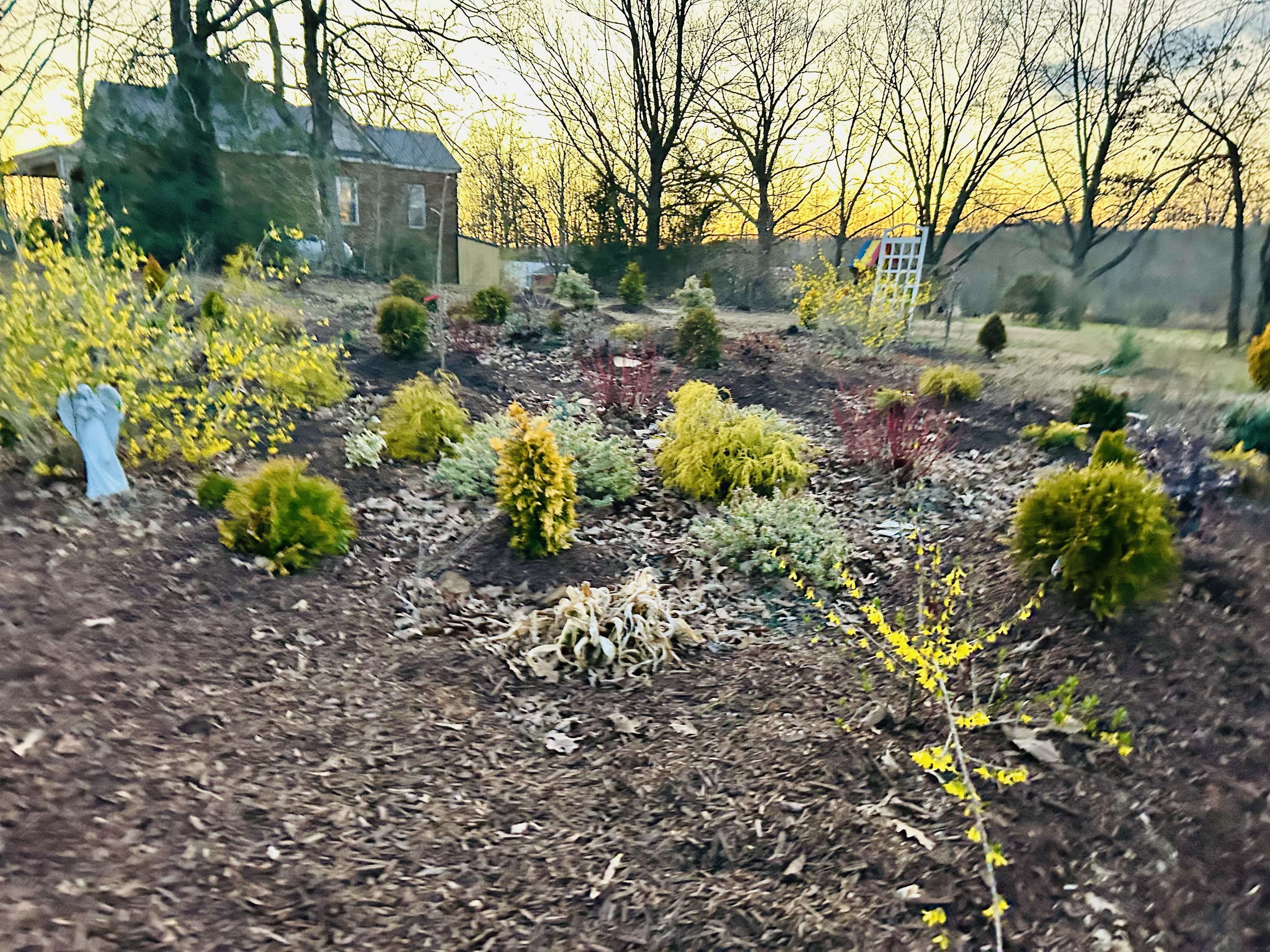
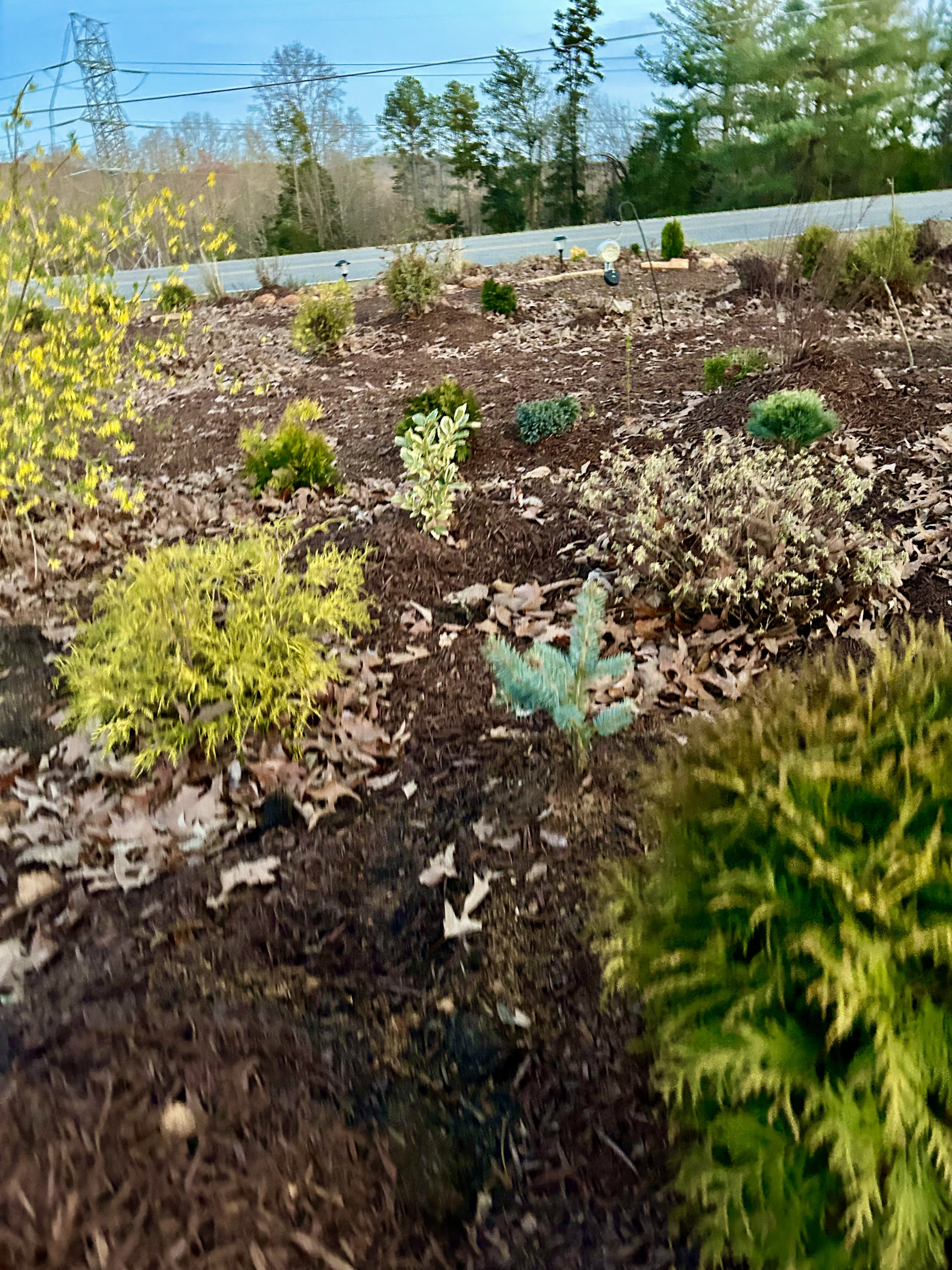
I have used no dig gardening for one year now. I can say that plants show healthier results than my no dig gardens. I have sometimes moved plants from the Butterfly Garden, a traditional garden with a lot of heavy clay, to the other no dig gardens. As a result, those plants have been saved.
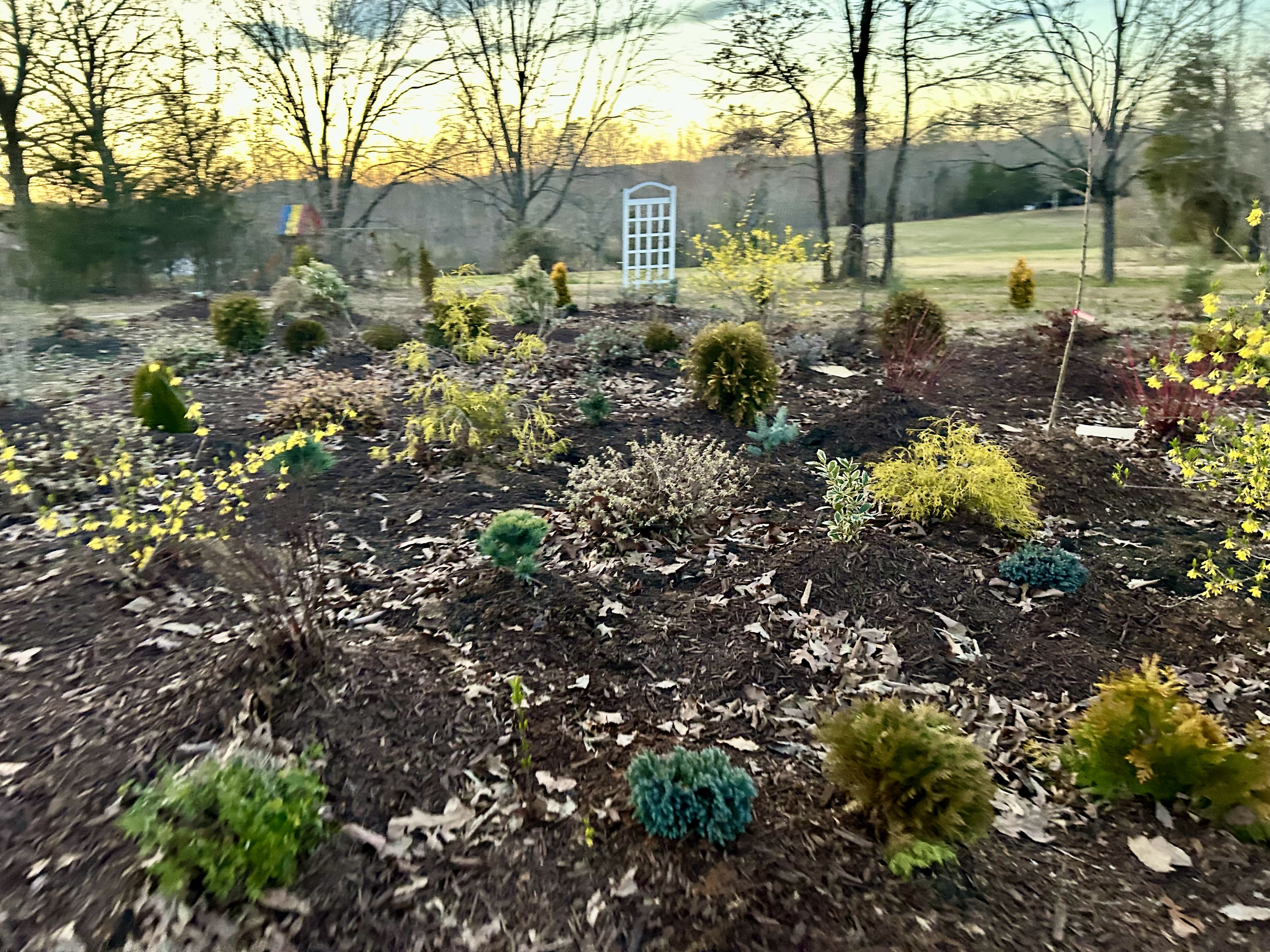
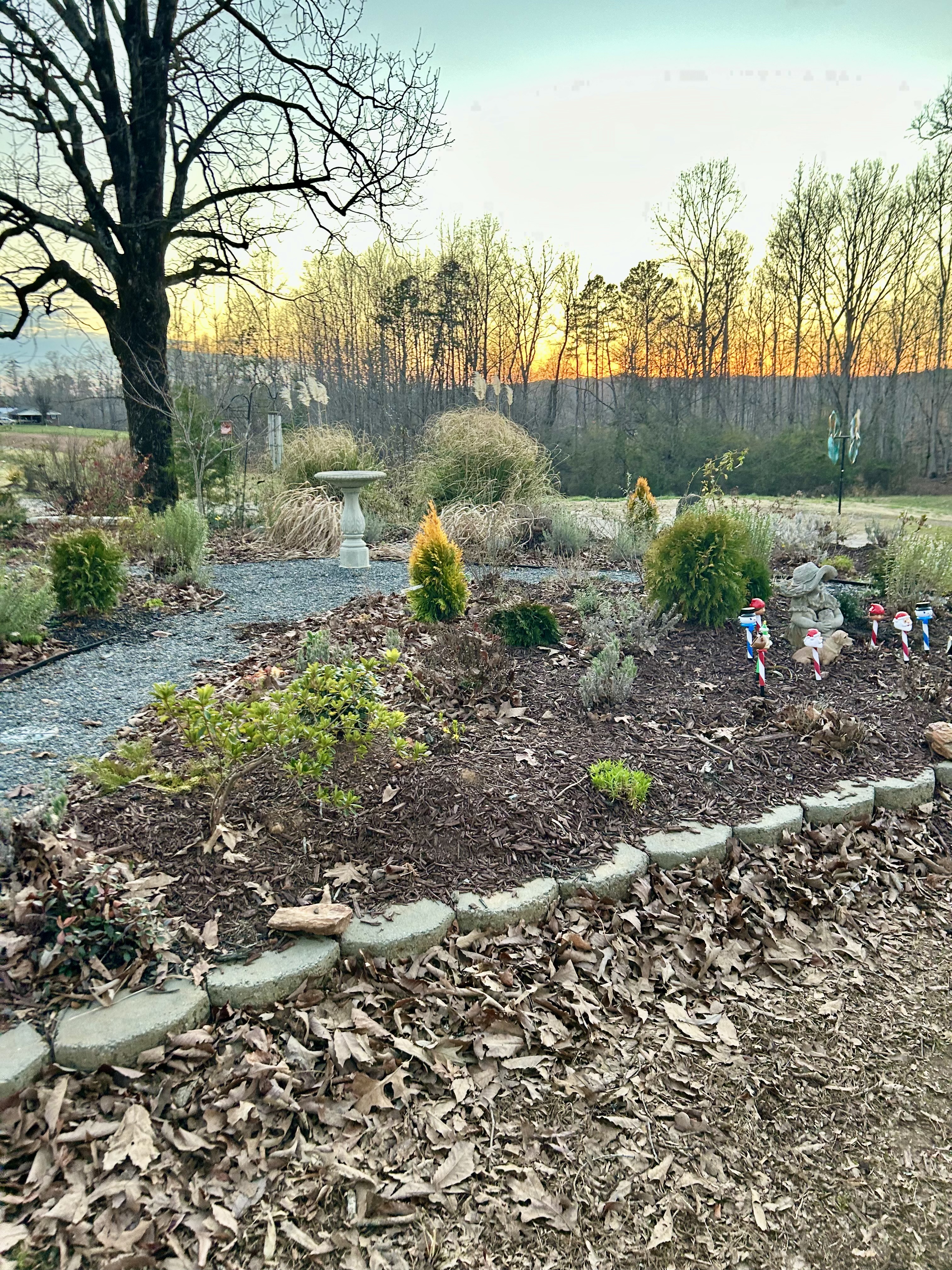
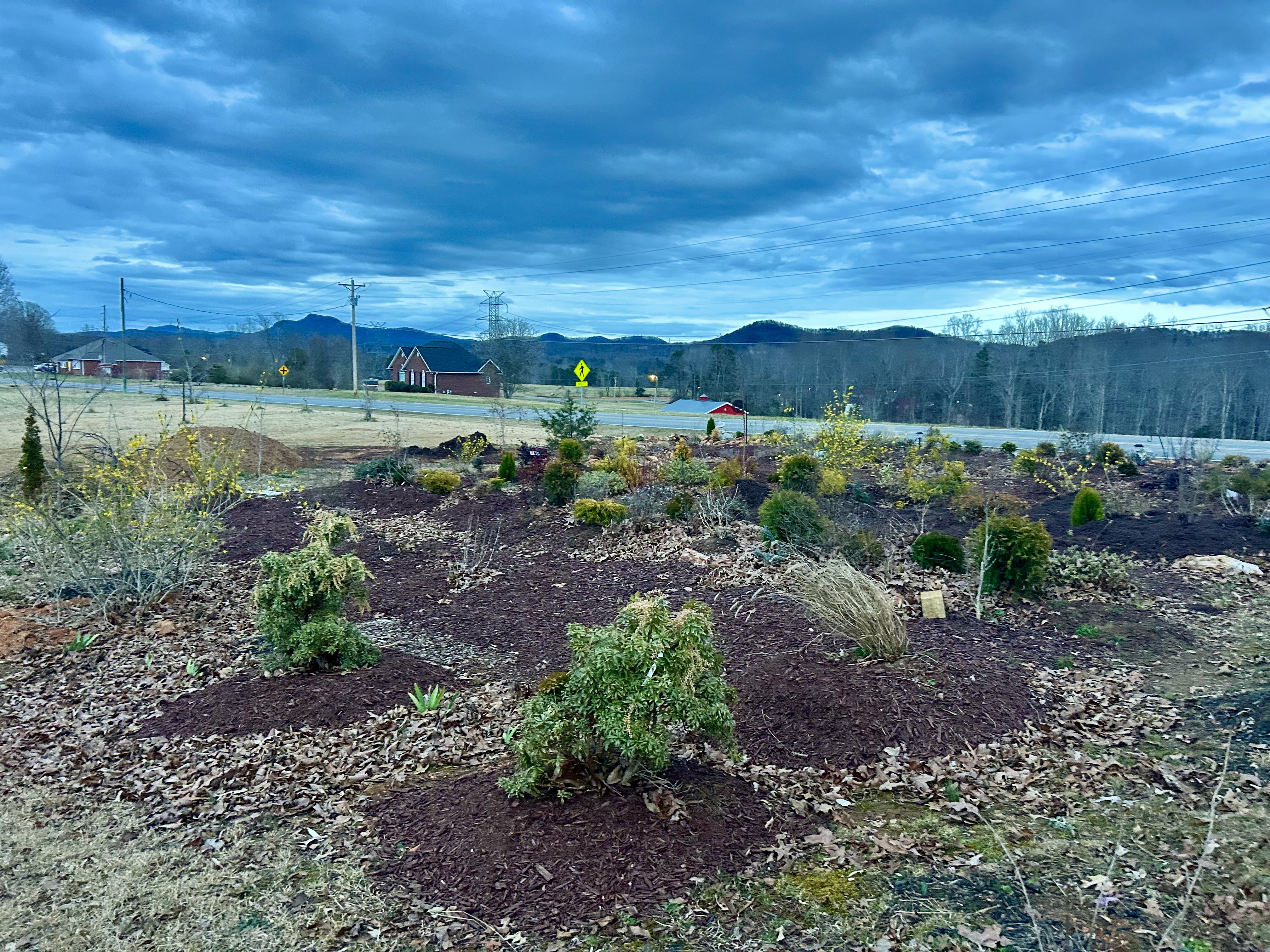
I have completed two sections of no dig gardening around the current areas in Arendelle, while working on the third and largest throughout the winter. The fourth section was completed last July. This third area is made up of mostly evergreens, conifers, and winter interest plants, such as Arctic Fire Dogwood.
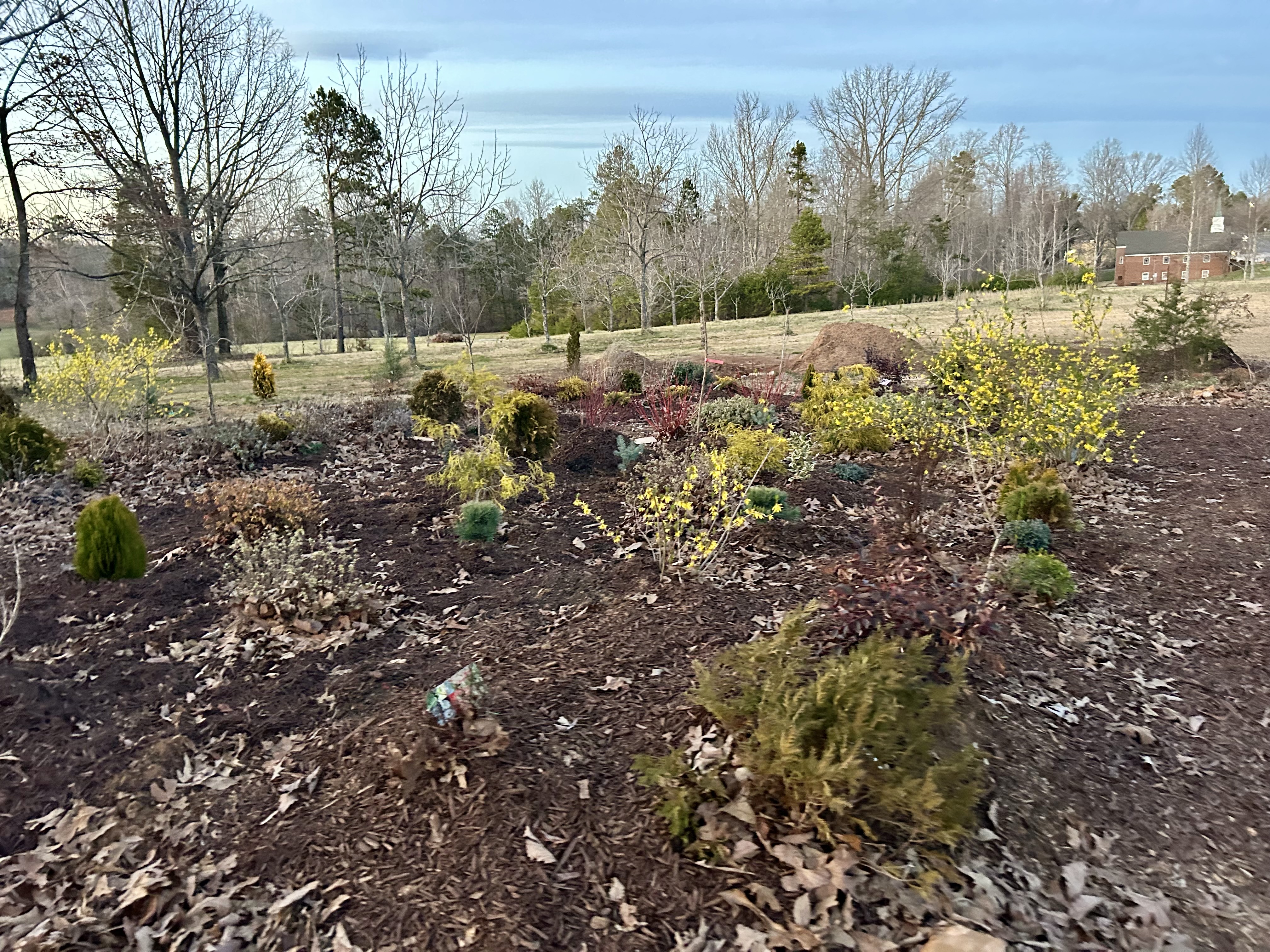
The Arendelle Garden is now two years old, and I had started planting certain plants directly in the red clay. I’d never do that now. In the Winter Garden (the third section), I have planted mostly evergreens. This season I’ve added blue green conifers to contrast the golden greens, such as Gold Mop False Cypress and Forever Goldy.

The forsythias now add a new dimension as they bloom.
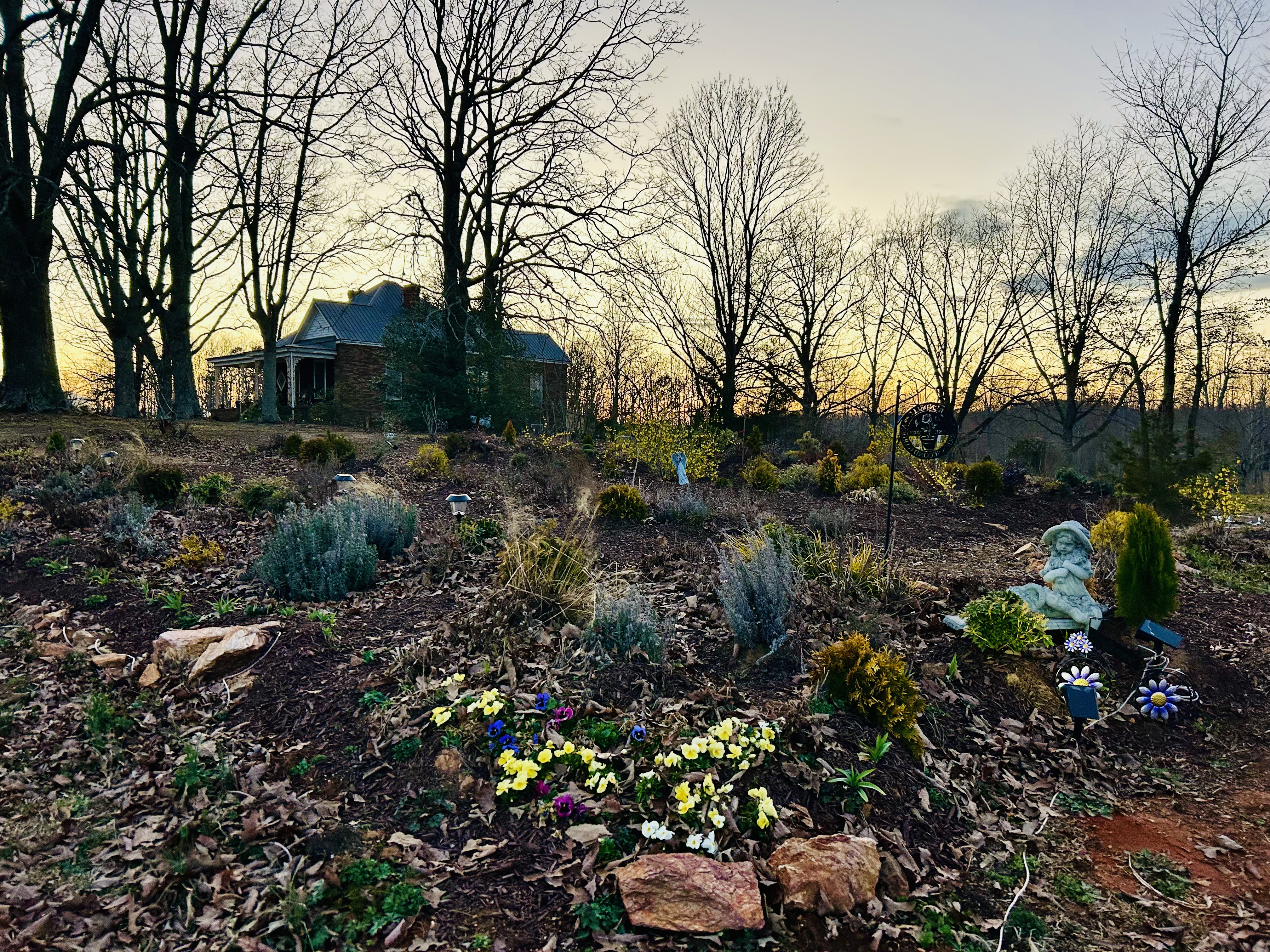
From September through October, I completed no dig gardening in the front. I created a no dig tractor pathway in the first and second section giving each layer more definition. It also makes it easier to enter the garden with my Cinderella carriage (my tractor.)
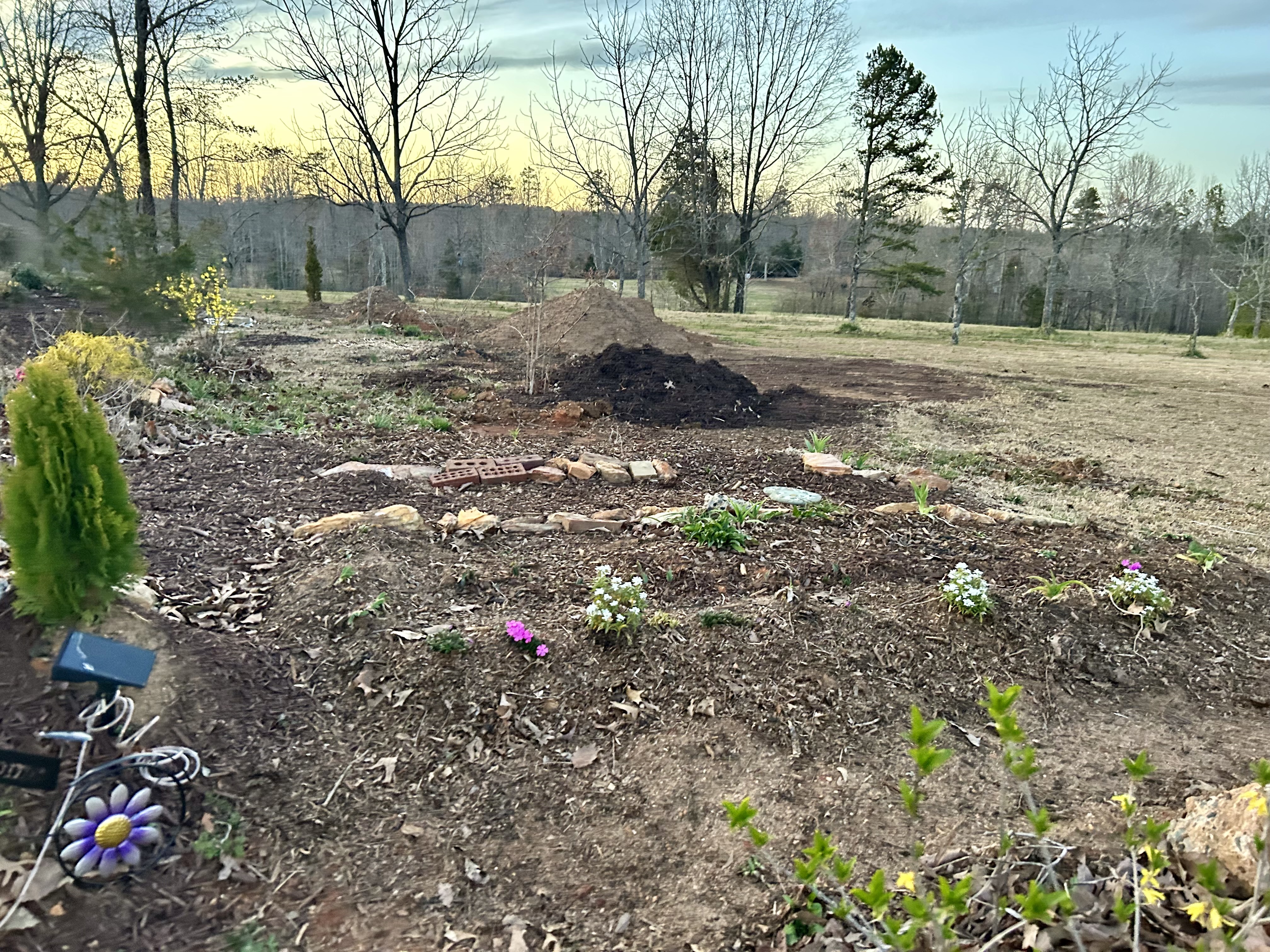
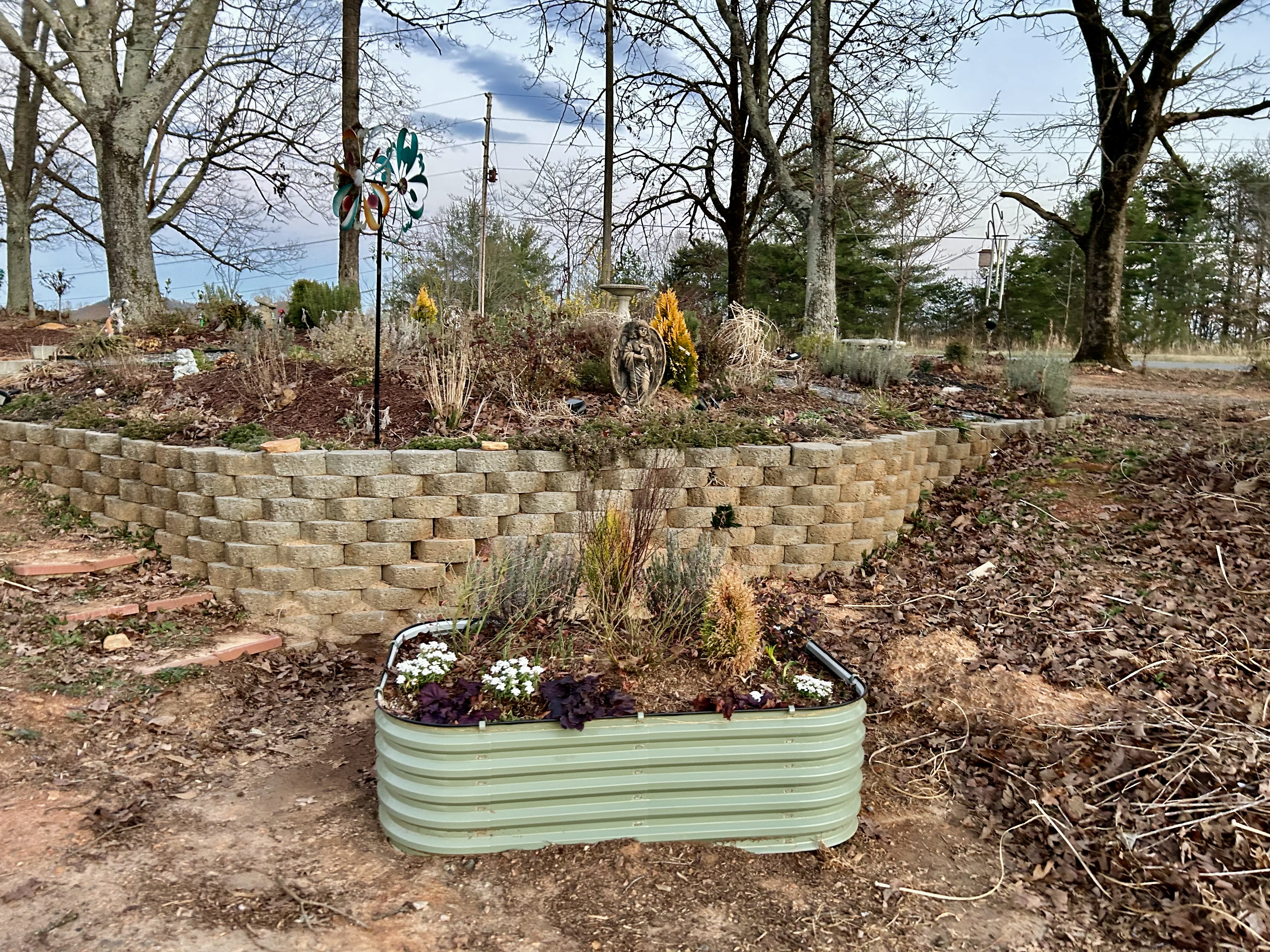
The Lily Garden will eventually become a section of the Arendelle Garden. Right now, it is the smallest one on the property, and it is also no dig. It will have gladoilas, alliums, candy tuft, thrift, tulips, hyacinths, and other flowers besides lilies, but it gives lilies a space to spread.
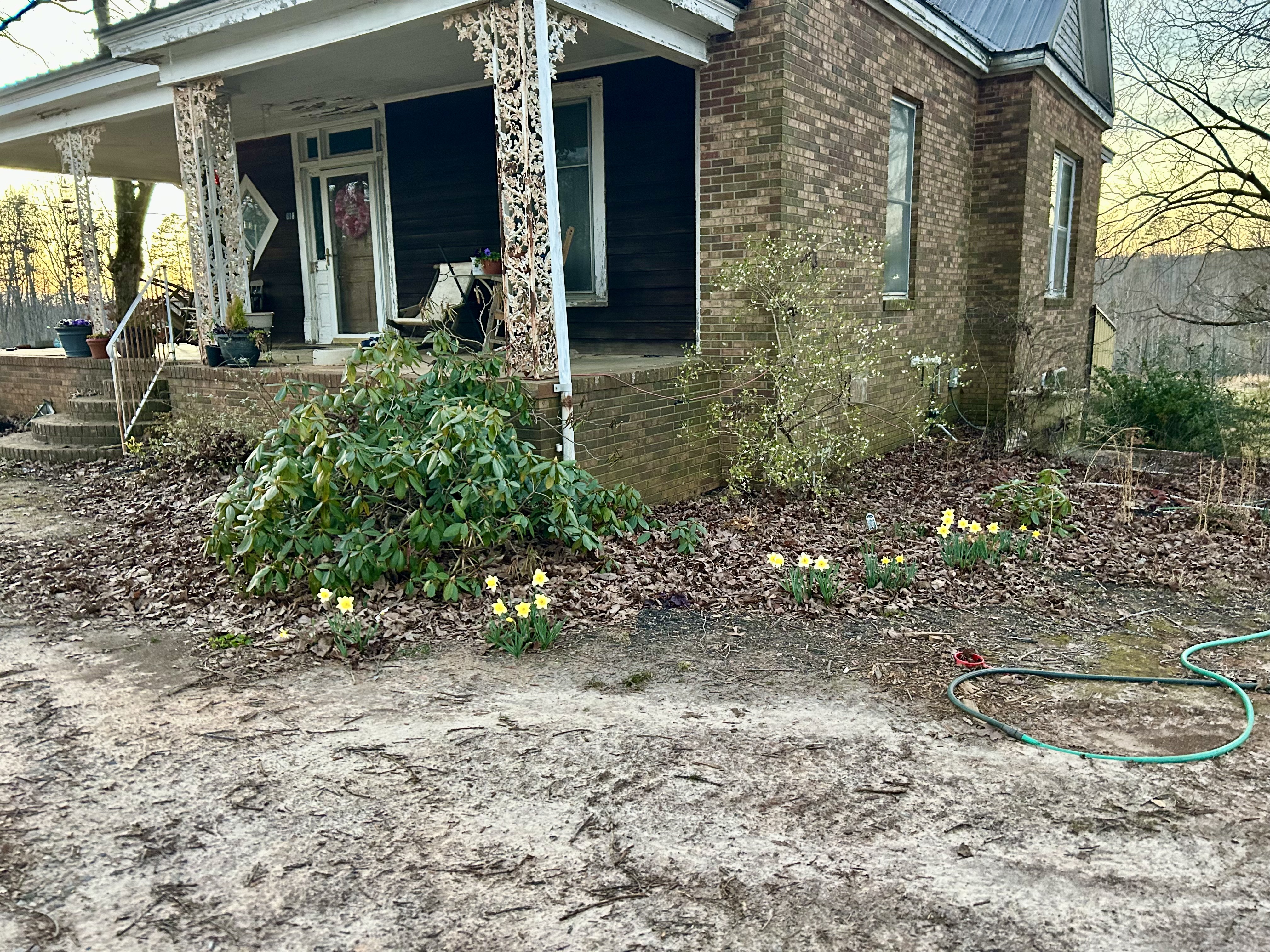
Daffodils bloom in the Cora Bell Garden, a small shade garden.
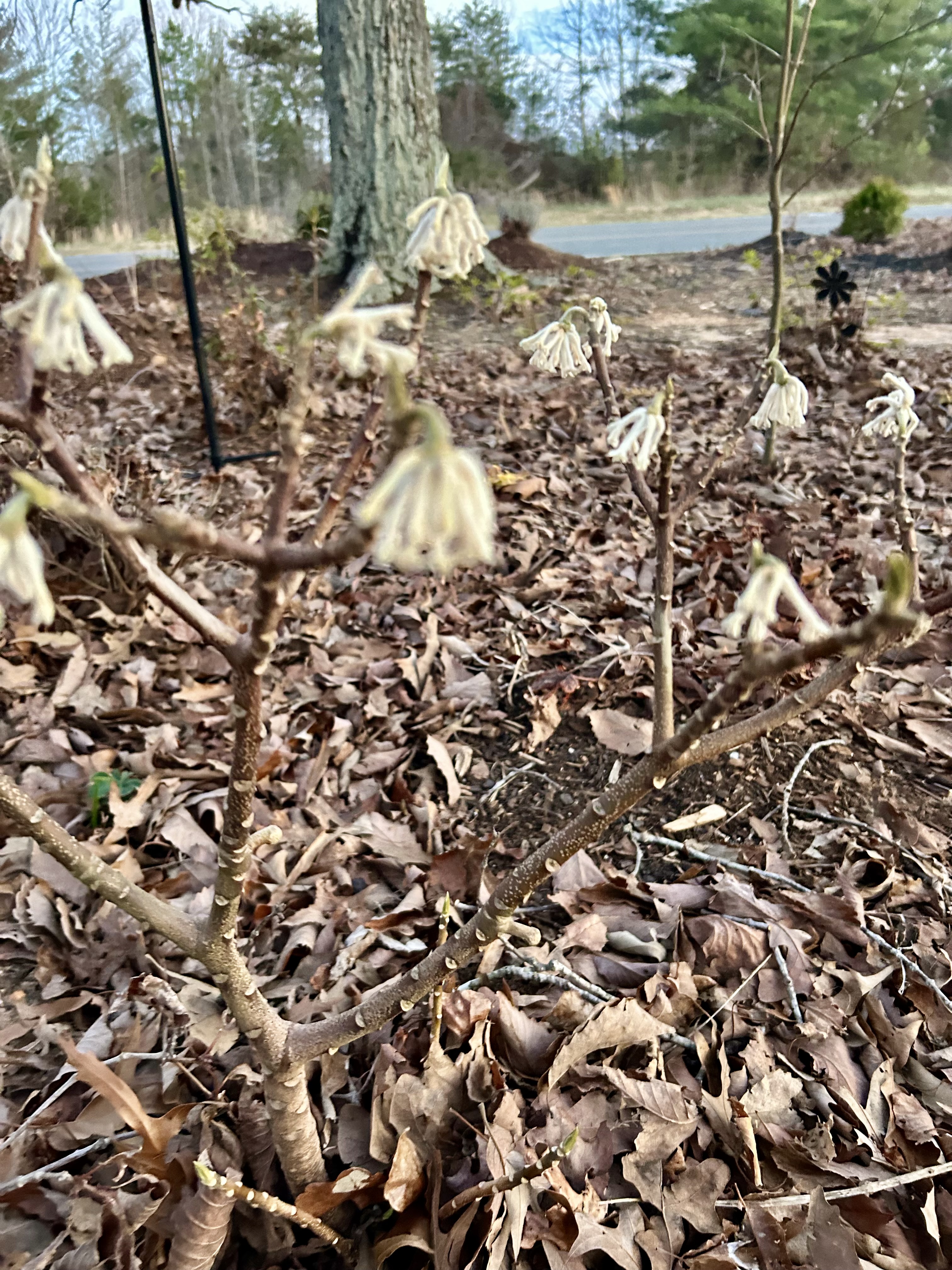
The Paperbush plant is one I saw at Biltmore Estate last February. It blooms in the late winter, and has a wonderful scent.

 Corrie's Season