
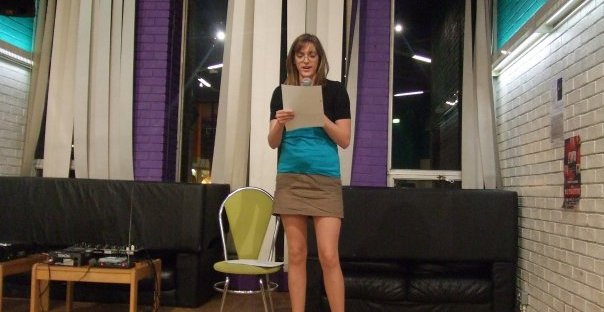
This is my first official post written by R.A. Bridges, my author’s name going forward.
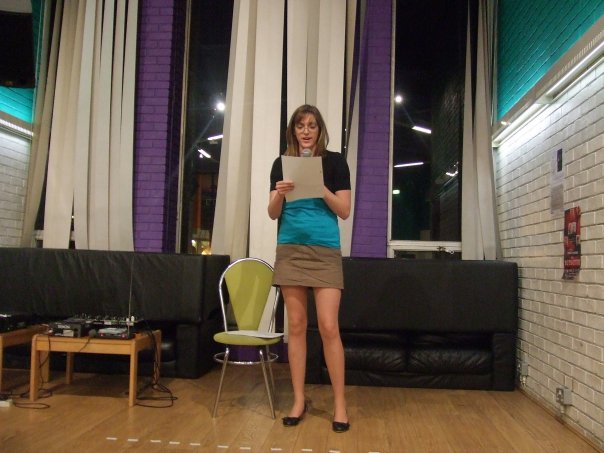
I’ve met all kinds of writers in my life.
I’ve written and published work of which I’m proud and some for which I no longer care.
It’s bound to happen when you’ve written for as long as me: thirty-two years. While I’ve written about writing and parts of my life as an author and poet, I’ve never done a full reflection. It’s time in this Part I, and later, the Parts II and III.
I’m 37.
I have a little life experience.
Twenty creative works from fiction to short memoir to poetry to academic work and photography have been published.
But, I take the greatest pride in building up 8th grade writers, so they can aspire to their dreams whether exploring a specific career or applying for the Governor’s School of the Arts.
As a Child
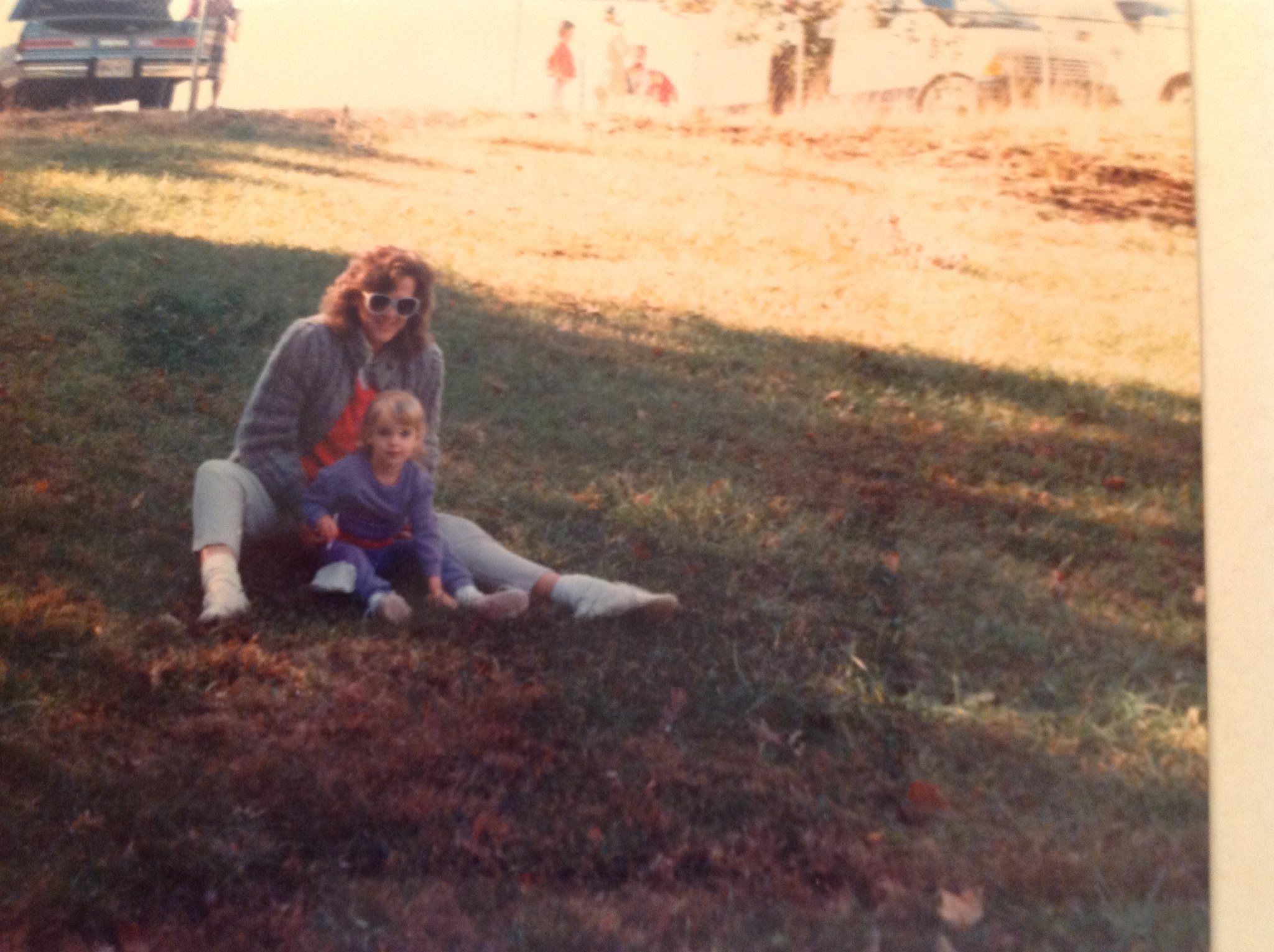
In 1990, my Kindergarten teacher told the pediatric specialists who observed me over the course of one year that I was “able to learn but unable to function productively in a classroom setting.” She added that I was “unable to follow stories” and “deficient in in imagination and creativity.”
This teacher probably thought I’d never read her words about me anymore than the pediatric specialists did when my Mom turned over the paper work to me in May 2020 before my daughter’s, Corrie, death. I’m glad she did because it gave more of a connection to what I suspected about myself as a child and teen. It brought me even closer to my son, Hayes, diagnosed with autism, ADHD, and a developmental delay.
There wasn’t a single positive word my Kindergarten teacher had to say or write about me. She was grateful for the day when Mom and Dad put me in Greenville Public Schools, and in the paperwork, I see how hard my parents fought for me to never be held back. Nor did they want my “cognitive development” evaluated, as it was called at the time.
She does not know the days of the week, even when given the start of Sunday, nor the seasons or months of the year. When asked for the months of the year, her response was ‘spring.’
I remember being placed in a room of blank white walls with one to two adults staring at me. They watched me. They never came too close, and they asked me questions as if I was an adult. My responses, like my son’s would later be at age 5 almost exactly the same, reflected a child who struggled to communicate with the world.
I did not speak fully until about late twos to three, and I struggled a lot with speech and processing. I still struggle with processing, and need time to myself to think through a process before responding.
“When asked to draw a rectangle, her response was, ‘Can’t make one.'”
Just because I was identified as a child with learning disabilities and possibly autistic rather than academically gifted, it failed to mean that my intelligence and gifts would never show.
It is also the reason why my growl comes out more often when it comes to our son because I know his intelligence and charisma will show not at the time a test says, but at the time it is meant for.
But I Would Write
Already, there weren’t great hopes for me by that teacher and those doctors. I had a speech delay, my responses were viewed as echolalia rather than as original thought, my drawings as “grotesque,” and I failed to respond to social situations like other children.
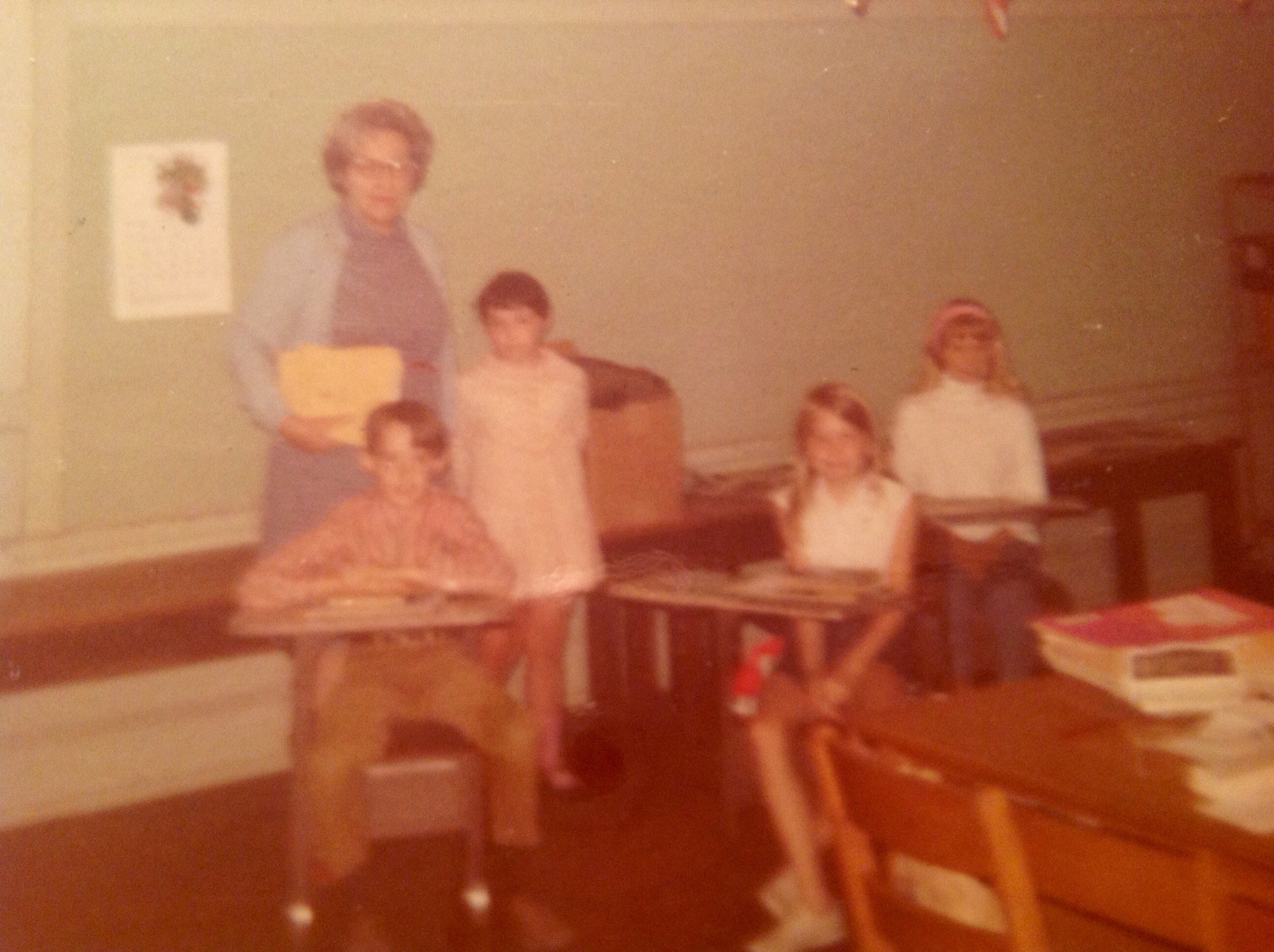
I struggled with writing in my earlier years. My handwriting wasn’t in the lines, but my elementary teachers taught us cursive, and I wrote better in cursive.
Mom’s middle sister sometimes took me to work with her because overall I was a fairly well-behaved child. She took the early 1990s’ printer paper with the borders on the side you had to tear off, and folded into a book for me. I drew until I could write, and this aunt later became a children’s author.
Where the Kindergarten teacher and some of the specialists doubted my future success, my family encouraged me. I went from struggling with handwriting to writing most of my “first books” in cursive. Most of them were about animals or fantasy because both allowed escape from a world of humans I struggled to understand. I almost always favored animals or fantasy creatures, such as angels or wizards to humans.
As an adult, I’d later look back on that time and figure because so many humans outside my family had given up on me and I had so few friends, I rather be a part of a different world. I believe now that is what drove me more and more to play out stories, write and draw them. I yearned for a world where I was understood.
One of the greatest influences in my life as a reader became my paternal grandmother. Her middle name was Aurelia, one of my daughter’s two middle names. She bought Hooked-on-Phonics, which I despised, to help my reading and speech. She’d give my parents newspaper clippings for me to read. Up to one year before she died, when I was 16, she asked me to read one of those clippings out loud to her.
I had to become a better reader to be a decent writer, and my greatest influence in this was my Mimi, my maternal grandmother with the middle name, Ann. She encouraged me, and believed in me when others might question encouraging me too much. She never doubted that I’d become an author.
She claims that she “kept your first books,” which are nothing more than Mimi Likes Cats. Because Mimi, like my aunt, was an artist herself. She wrote and painted creating pieces that I always remembered.
I submitted my first book to a publishing company between fourth and fifth grade about how we rescued three kittens. Two were very sick, and we did everything we could to save them. We cherished, Tiger, the one who survived, and I came to write my first piece that had death and grief only one year before I’d lose my grandfather. The publisher actually sent me a letter back giving my first critique. She told me my writing was good for someone my age, but the plot wandered.
Then in fifth grade, my essay won the Lt. Governor’s Award for writing for my elementary school.
A Teen Dream
In 1999, I attended the summer program for my state’s Governor’s School for the Arts for Writing. At the time, I wrote stronger poetry, and I struggled with fiction. I hadn’t thought nor lived enough life to write memoir, which would become my best work in the early 2010s.
This was the first time in my entire life where I hung out with a group of kids my age and felt somewhat understood. I went away from home for two weeks, and took two classes focusing intensely on poetry and fiction. Poetry was my strength, but I could never get a story right.
I’d begin with an excellent exposition with a beginning to grab the reader’s attention, setting and characters, but my middle sucked. If I’d ever hoped to become an author, I was no where near the goal.
I remember my roommate’s parents brought an entire computer and printer for her at the time. Let’s be clear. This was 1999. Starbucks was just popping up around the nation, dial up Internet with the AOL man running across the screen, and the annoying telephone line is busy sound were ever present.
My roommate did not have Internet access on her big, tan box computer as most college campuses now provide everywhere. The computer took up more than most of her desk. My parents brought me a typewriter, so I could present my final drafts in a presentable fashion.
But, we did most of our writing in the classes where we had computers and printers. We’d had to create a portfolio. I’d taken the first step at age 14 towards becoming a more professional writer, or so I believed. Most of my portfolio featured poetry. I was ashamed of my fiction. I hadn’t developed the true craft of story as I’d learn late in college, most importantly, as a young reporter.
The poetry I wrote isn’t anything I’d write home about. In fact, my parents and other family members possess more of my work from 1999-2003 than I do. I cringe when I read some of it, but it reflects a truth I couldn’t yet identify.
It reached out to that, as of then, unidentifiable misconnection I’d felt as a child chased by the other students in the gym in Kindergarten. It reached deep inside to a type of emptiness I felt when I struggled to relate or understand other people my age. I was too easily trusting as a teen, and wanted to show love, but that wasn’t the cool or accepted thing to do.
Honestly, reading some of the poetry from that time, I’m amazed I was ever accepted to the Governor’s School of the Arts. I’ve had students write better material than this, but one strength I did possess from an early age included a focus on imagery.
This imagery in my poetry, lyrics, and the little fiction I wrote always had a double meaning.
Hallow trees,
broken windows,
dark hallways,
echoes of laughter ...

from a poem called "Dead Sanctuary" written in 2000
Let me be clear. I despise the actual poem, and view it as nothing more than a fourteen-year-old girl, me, “bleeding in her notebook” as some writers say.
Authors, poets, and writers must all begin somewhere, and my poetry teacher from the Governor’s School of the Arts was one of the first people outside of my family to really encourage me towards continuing my writing. He said that I was good enough to become a published poet.
Of course, my dad laughed and said, “Better learn to write fiction. Poets don’t make money.” Thanks, Dad, knew that even at 14, but we all had to start somewhere.
Smashed in your patched
walls, and you continue
to look down
into a fire.

"Crushed" published in my high school literary journal sometime between 2000 to 2001.
In the few samples of writing from my early teen years that I still possess a single line stands out to me now with promise: “Smashed into your patched walls.” I wrote promise and not finalized. I’d change it, if I ever rewrote it, but I don’t rewrite, look nor consider anything from my teenage years now because it was a simply a stepping stone.
“Crushed” was about a stupid boy. I remember which boy, too, and I laugh thinking about it now.
In my teen years, envelopes, sanctuary bulletins, notebooks, and journals with different pieces of writing littered the bedroom floor–much to Mom’s displeasure when her mom and sisters were coming into town. Some works connected with each other while others had nothing to do with other writing. My room with my words written in strange places and books, my dearest friends, warmed the part of my soul that felt unrecognizable to the rest of the teen world.
I think, as I’ve met artists and writers through the years (specifically in college), that we do love a lot. We have a lot of empathy and love for people, yet we feel alone because we’re never understood. We’re somehow too different. When some people attempt to put what we can and cannot do in a box in our childhoods and teens, our openness to show love and vulnerability eventually turns into something different after it is identified as unaccepted.
By the end of my first year in college, I would change from hoping to show that love and empathy to closing up my emotions and thoughts from the world. I’d become a young writer developing her fiction while still writing poetry, but my distrust of everyone would continue to grow.
By R.A. Bridges
See “A Reflection of my Life as an Author Writer and Poet, Part II” (covering the college years) next weekend.
All work copyrighted R.T. Dickinson, 2000-2022.

 Corrie's Season
1 thought on “A Reflection of my Life as a Writer, Author, and Poet, Part I”