
Last week, I was able to share great news publicly on the three month anniversary of when Corrie earned her wings.
But I was unable to truly celebrate the moment.
I was unable to write or speak much about it.
I’ve already written about those events in last week’s posts, mostly occurring on the Wednesday marking week thirteen; the time since she earned her wings.
Because grief swings.
It’s not the kind of swing you want. When my son goes to his new swing, he looks as if he is having the time of his life.
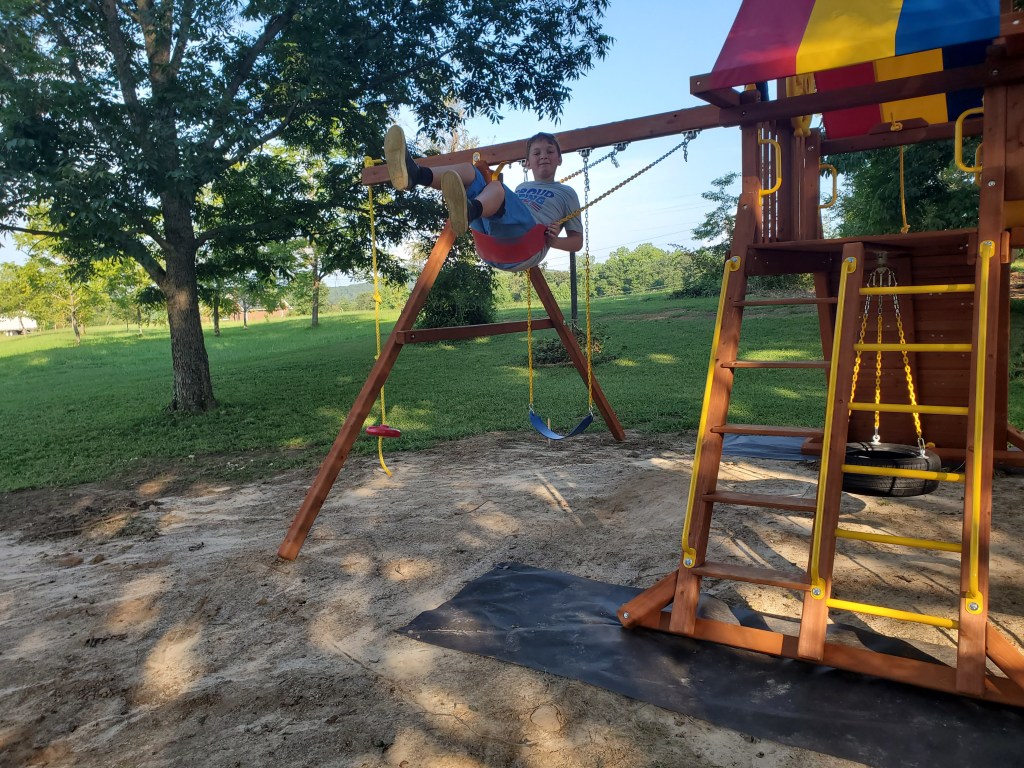
The Grief Swing does not Mean the End.
We need to talk and write about grief.
The grief swing works differently than the childhood joy of the play set. Between late last Wednesday through early this Tuesday, I went into the darkest hole, since Corrie’s graduation to heaven.
And I’m tired.
After a tornado,
after the start of rebuilding around the farm,
after Corrie left us too early,
after our puppy, Jack, was hit by a car, and we had put him down,
I looked to the sky from the walking path my husband mowed for me, and said, “I’m tired.”
I’m only 35, but feel older some days.
But I’m not out. Even my poem, “Three and Thirteen” of which I’m proud, carries hope.
She dances with bare feet and fluffed up angel wings.
from Three and thirteen by rebecca t. dickinson
There is hope in grief. That’s why we need to talk and write about it, and not stuff it under the 1950s’ “hush, hush … Hide your crazy” carpet. We have to accept the swing will not keep us in the hopeful moments constantly anymore than being locked in the medieval torture chamber days.
get up some
mornings
when the fog
covers the
grass knee high,
still uncut. it
blankets the hill
and shrouds the
mountain in the
near distance.
Excerpt from “Some Mornings on the Farm” by Rebecca T. Dickinson
The hero and the hummingbird
I did not envision the sun returning soon. From Wednesday, August 26th until this Tuesday morning felt like being stuck in a consistent winter fog and rain pour.
I took Tuesday off of work because I was exhausted. I didn’t even want to go see my therapist, as much as I needed it.
My husband, John, drove Hayes and I to our appointments. On the way, I had a daydream that felt so real, and I wanted to be left alone with the moment. It was as if it belonged to my catalogue of Corrie memories.
To date, I’ve had four dreams I remember vividly about her. In the first, she showed me the field behind our house full of yellow and orange sunflowers. In two other dreams, she appeared herself, and I got to hold her in one of them. In the fourth dream, she sent a hummingbird I held in my hands. It was only recently that I connected the pieces in the last part of the dream.
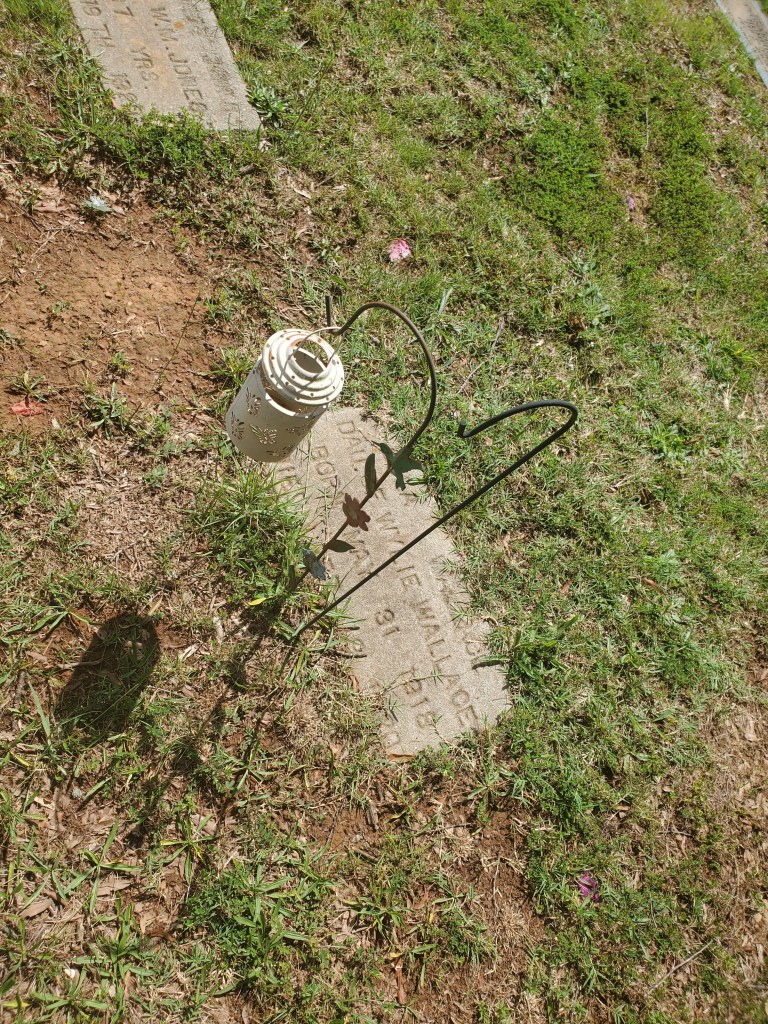
The hummingbird has come to be a hopeful sign from or about Corrie. When I wrote, “Three and Thirteen” last week, I asked “Where is the hummingbird?” Last Saturday, as I toured the graves for my Memorial Kinder Walk, I discovered a hummingbird on its feeder above a little girl’s grave. She had died in 1920, but at one time, someone recently (as in the last twenty years) cared for her grave. I saw the little green hummingbird just above the feeder.
In those days where I felt like the ghost walking the cemetery, my heart flickered. I found some hope.
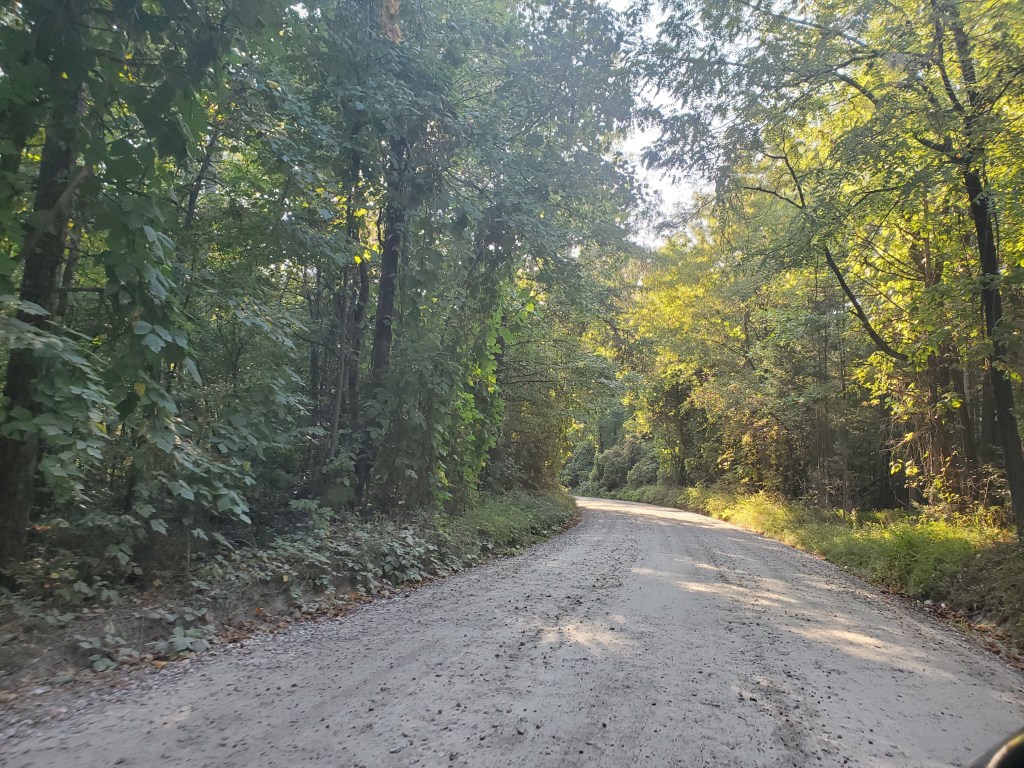
The first day dream or vision came as we rode through back country roads. Corrie appeared in an open area of a deciduous forest similar to the areas in which she’d grown up, but without the bulldozers, road construction and neighborhoods with three inches between houses. It reminded me of my hometown the way it was before traffic backed up and they tore down the trees in the woods in which I’d played. But it also reminded me of the area in the country where we currently live.
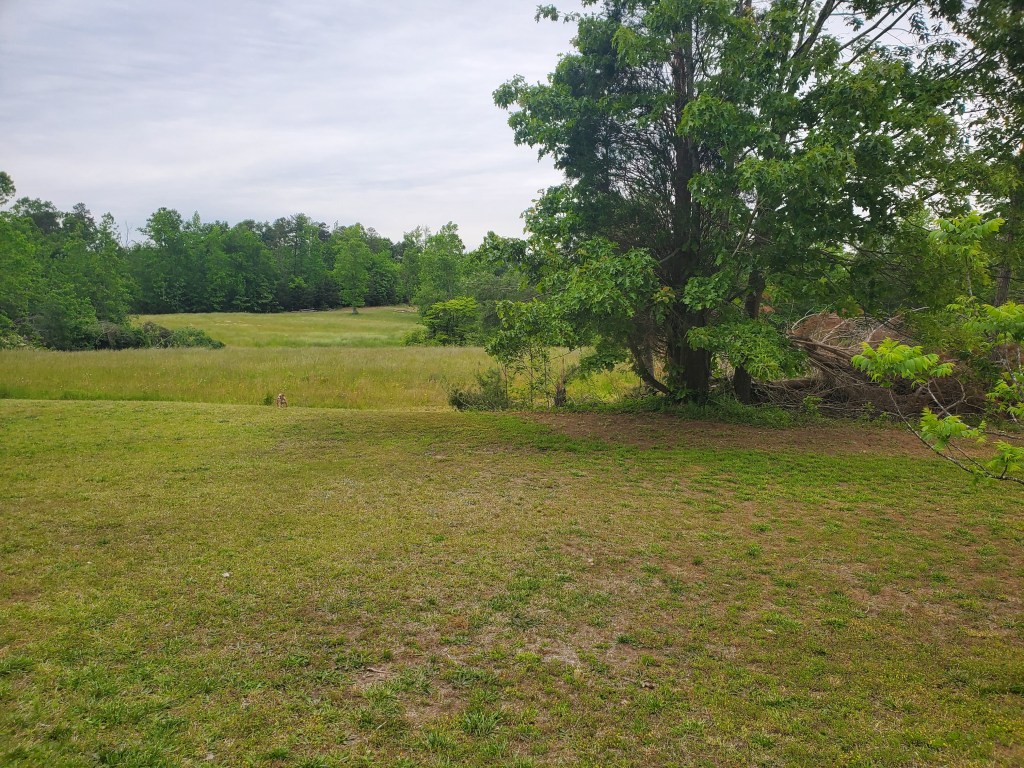

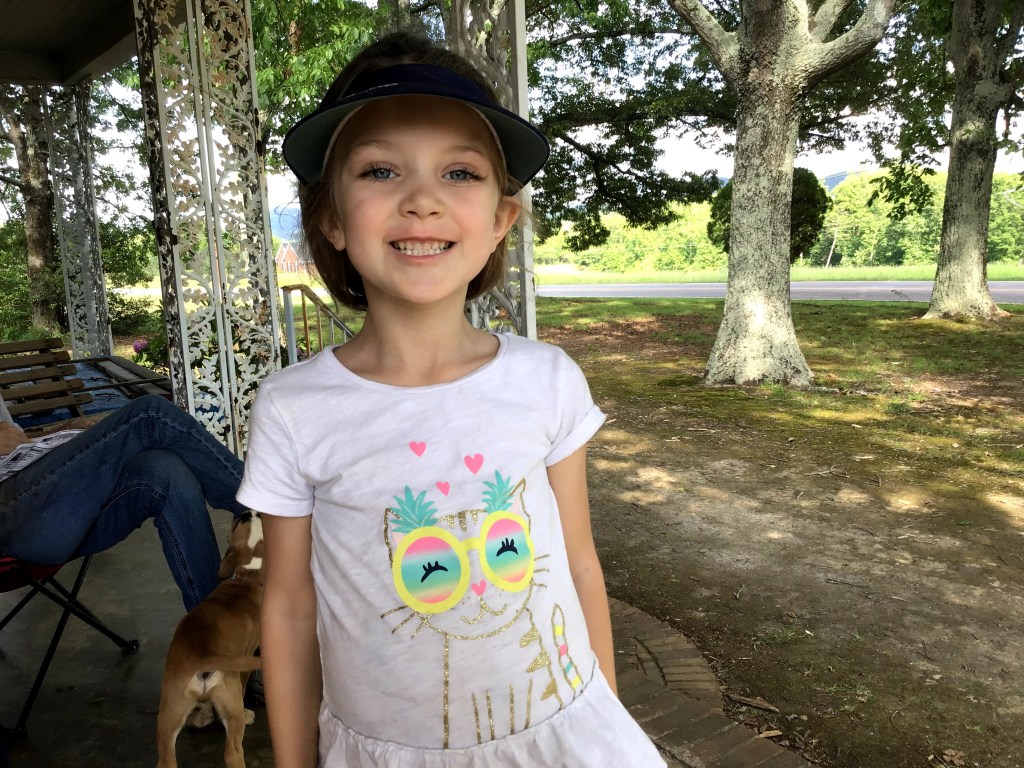
I experienced the vision as clear as any memory in which Corrie was with me in this lifetime. The temperature was the early spring of the area in which we live, and a large tree similar to the ones in the front yard sprung up in the center of the forest clearing. The only difference was that this tree had large boughs closer to the ground like those of the South Carolina Lowcountry.
Sun came through as if the colors of the sunflowers from my first dream collided into the kind of daylight we long for on the darkest winter day. Corrie swung along a bough of the tree, and extended her arm from one part of the branch to another. She would stop in the middle and just swing.
“Mommy, watch me,” she said.
My husband said something in conversation as he drove, but like some teen girls in a daydream about a crush, I did not want to leave my Caribbean coast of a vision.
She laughed with the giggle of a girl who was intelligent enough to know what a child’s laugh sounded like and emulated it, but used it with a specific purpose.
“Mommy, you’re not looking.”
Even in this green heaven space, Corrie held me accountable. True to nature, she was not running into my arms, but playing outside.
I saw her in about four different outfits as if someone was flashing cards to create the effect of a twentieth century cartoon. She appeared as a three-year-old with her curls barely to her shoulders, and her cheeks still full. She wore the Frozen II jacket I’d bought for her in March before the COVID-19 shut down, and had her hair half-up and half-down in the way I often fixed it. Corrie wore a skirt with leggings and tennis shoes. In each version of herself, she smiled and laughed. Those blue eyes lit up my heart with a happiness that bad news could not take away.
She looked at me with the glare that meant she had a message. Then she held up her hands in the way of a child who has a question or says “I don’t know.” Corrie held them up, shook her head, and smiled.
Mommy, I’m not a dead kid.
Corrie
When I heard those words, I could not help but smile because in an instant she rescued me from despair.

A series of flashbacks returned to me of Corrie at three different parks as she guided me away from the heaven space. First we went to a walking park with a playground at the center where the town hosts an annual festival in May to attract people outside of the area when the festival true to my hometown, Fest-i-fun, was once downtown.
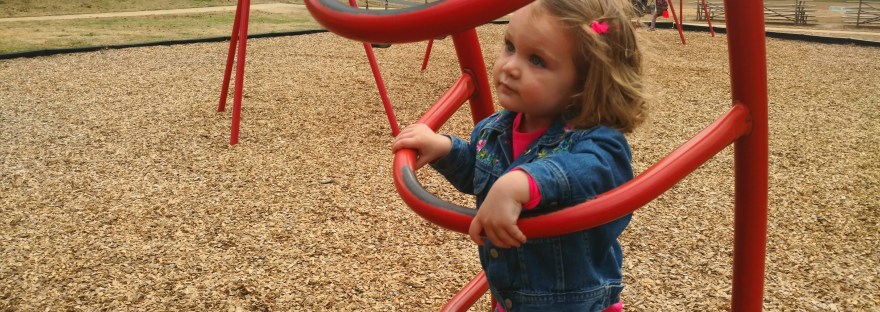
Corrie always wanted to go on the tall monkey bars even when, at age two, her arms were not long enough to reach from one bar to another. I propped her on my shoulders as she went went from bar to bar. I helped her extend her arms.
As she got older, I held only her legs as she went from bar to bar independently.

I saw her at age three and four pulling herself up on a bar with what looked like large handcuffs. She loved pulling herself up and swinging on it. She would sometimes argue with any other girls who were interested in it as a three and early four-year-old, but she matured into sharing without reminders as she grew.
Then I saw her at the park where I took my children the most often because it had the most swings and a smaller walking path around it. Corrie became obsessed with the chin up bar where other children would pull themselves up and hang upside down. Corrie reached from the side of the play set, and swung out to hang on the bars. She wanted my help to hang upside down.
We returned the green space and its large tree. She kept swinging and said,
“Mommy, do you see me?”
If I expected Corrie to appear to me as an older person or with words of wisdom, then I didn’t know my daughter very well. She came as the girl I loved with the voice I adored. Corrie and I were different people, and I’m glad because she reminds me how I can be too serious when she makes me laugh.
Words, Poetry Excerpts and Photos by Rebecca T. Dickinson. All work is copyrighted by R.T. Dickinson, 2016-2020.

 Corrie's Season